- Home
- About Us
- Products
- Resin Furniture
- 3D Epoxy Flooring Service
- Resin Table Top
- Wooden Epoxy Resin Table Top
- Metallic Epoxy Flooring Service
- Conception Chemical Consultants
- Chemical Consultancy For Construction
- Construction Chemical Consultant
- Tile Grout
- Foundation Grout Consultant
- Paver Block Chemical Consultant
- Waterproofing Chemical Consultant
- Epoxy Pigment Consultant
- Heat Reflective Coating
- Water Repellent Coating
- Epoxy Grout
- Chemical Consultant
- Industrial Chemical
- Construction Chemical
- Epoxy Resin
- Epoxy Coating
- Polyester Resin
- Joint Sealants
- Cristal Clear Epoxy Resin And Hardner
- Construction Chemicals
- Polycarboxylate Ether And Liquid
- Solvent Cement
- Tile Protection Sheet
- Water Reducing Superplasticizer
- Epoxy Resin And Hardeners
- Two Component Waterproof Coating
- Epoxy Floor Coatings
- Casting Resin
- Sbr Latex Polymer
- Epoxy Grout Formulations
- Epoxy Resin Tabletops
- Tile Spacers
- Tile Levelling Spacers
- Industrial Night Vision Epoxy Grout
- Sbr Latex
- Johnberg Marble Polishing Liquid
- Acrylic Elastomeric Coating
- Weber Tile Adhesives
- Decorative Arts
- Resinic Crafts
- PU Flexible Tile Adhesive
- Resin Pressed Flowers
- Dry Pressed Flower
- Epoxy Putty
- Resin Furniture
- Services
- Updates
- Gallery
- Contact Us
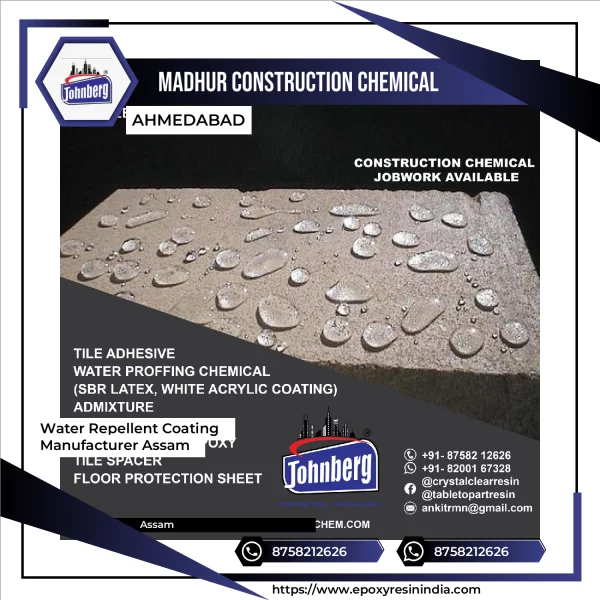
Water Repellent Coating Manufacturer Assam
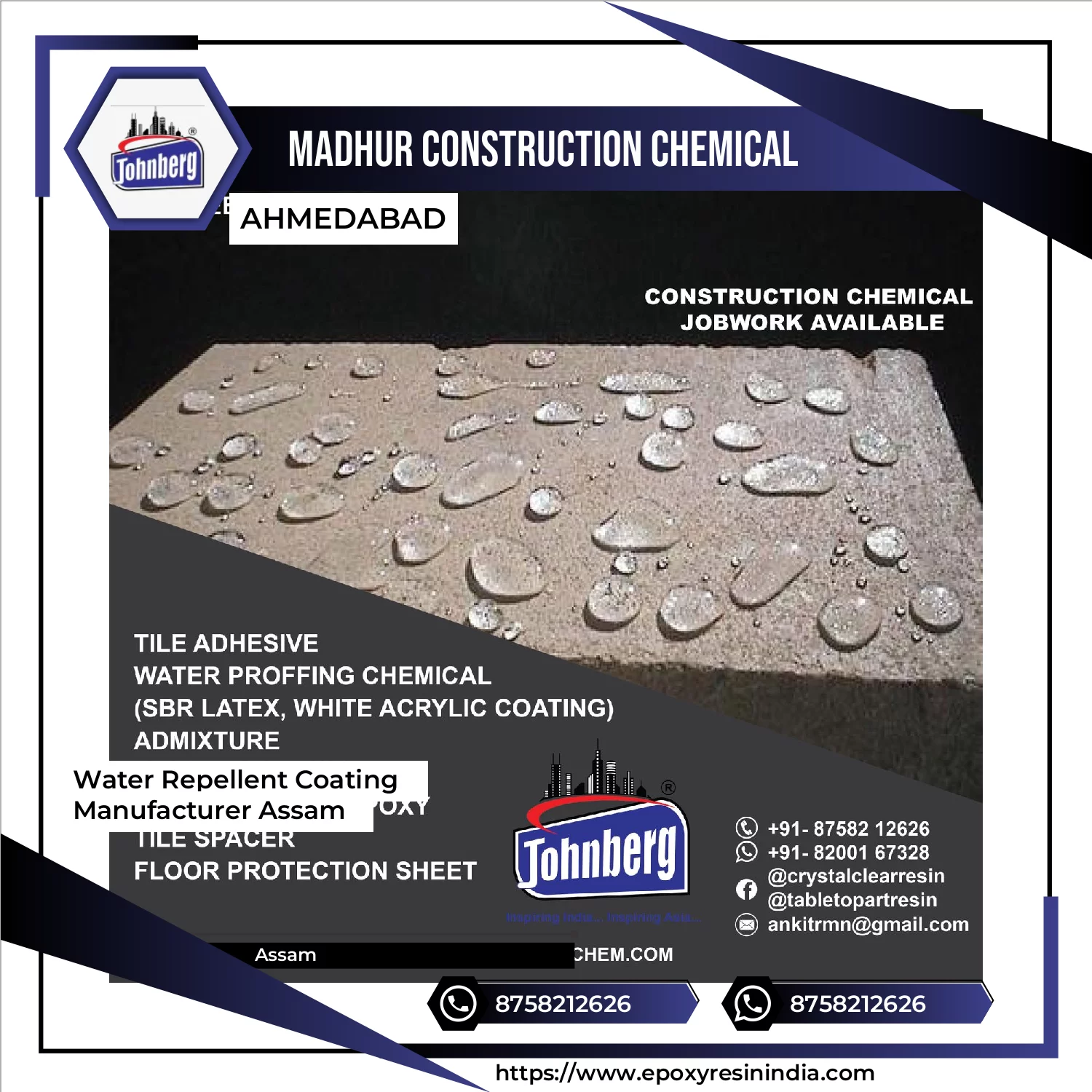
Details of Water Repellent Coating
Water Repellent Coating is a protective surface treatment designed to resist moisture and prevent water penetration into materials It forms a thin invisible layer that reduces surface energy allowing water droplets to bead up and roll off easily This behavior helps keep surfaces dry clean and less prone to damage caused by prolonged exposure to moisture
Common substrates include fabrics wood concrete glass and metals In textiles the coating maintains breathability while improving resistance to rain and spills For construction materials it can limit water absorption reduce cracking and inhibit growth of mold and mildew On transparent surfaces it preserves clarity while offering protection
Water repellent coatings are typically based on fluoropolymers silicones or advanced nanostructured compounds These chemistries create micro and nanoscale roughness that enhances hydrophobic performance Some formulations are eco friendly and free from harmful solvents aligning with environmental standards
Application methods vary depending on the product and surface They may be sprayed brushed rolled or applied by dipping Proper surface preparation such as cleaning and drying is essential to achieve strong adhesion and durability Curing can occur at room temperature or with mild heat depending on the formulation
The benefits include easier maintenance extended service life improved appearance and enhanced resistance to staining and weathering Regular reapplication may be needed to maintain peak performance especially in high wear or outdoor conditions Overall water repellent coating provides a practical solution for protecting surfaces from moisture related deterioration while preserving their function and look over time
Additional advantages include compatibility with diverse materials minimal change to texture and the ability to support self cleaning effects when combined with suitable surface design These properties make the coating valuable across industries such as apparel automotive construction and consumer goods where reliable moisture protection is required for performance and longevity needs
Offered Product

Water Repellent Coating
Packaging Size10 KgPackaging TypeContainerColorTransparentAgents For Water RepellentSiliconeShelf Life24 MonthCoverage1.2 Sq MBrandjohnbergMaterialLiquid Polymerwe Provide Technology To Provide Manufecture Water Repelant Coating, And Construction Chemical. ... Read moreWater Repellent Coating Supplier In Punjab
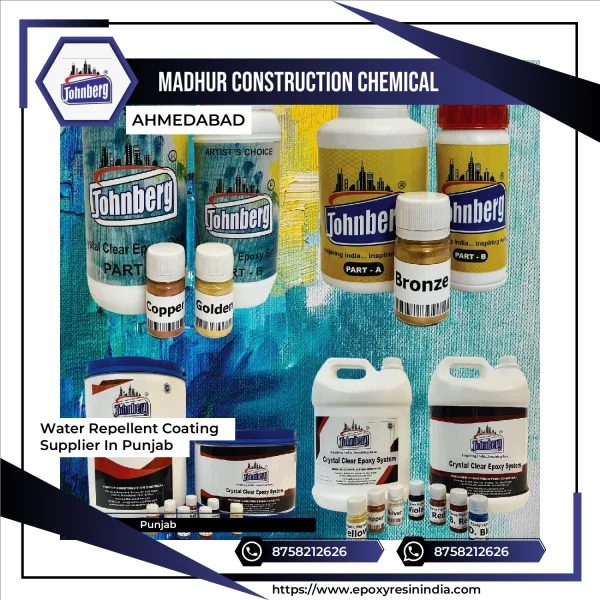
Water Repellent Coating Is A Protective Surface Layer Designed To Prevent Water From Penetrating Into A Material. It Forms A Thin Barrier That Causes Water To Bead Up And Roll Off Instead Of Spreading And Soaking Into The Surface. This Type Of Coating Is Widely Used On Building Materials Fabrics Metals Glass And Wood To Improve Durability And Resistance To Moisture Related Damage.The Main Purpose Of A Water Repellent Coating Is To Reduce Water Absorption While Still Allowing The Material To Ma Continue
Water Repellent Coating Manufacturer In Bhiwandi
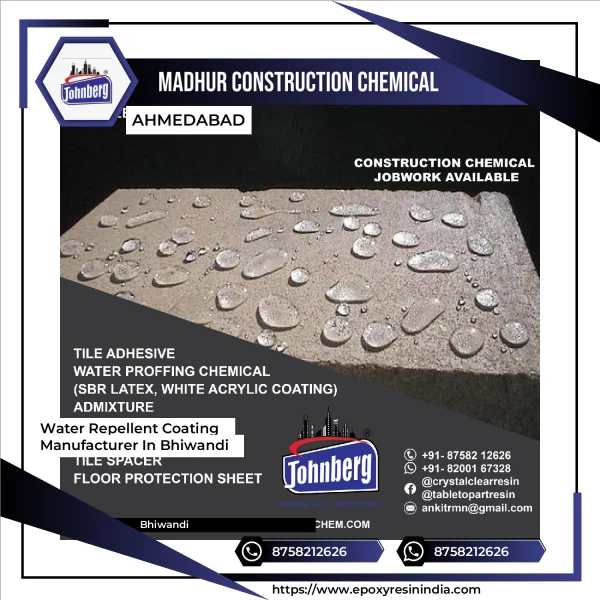
Water Repellent Coating Is A Protective Layer Applied To Surfaces To Prevent Water From Sticking Or Penetrating. It Creates A Barrier That Causes Water To Form Droplets And Roll Off Easily. This Effect Helps Keep Materials Dry And Reduces The Risk Of Damage Caused By Moisture. Such Coatings Are Commonly Used On Fabrics Glass Metal Wood And Concrete Surfaces.The Main Purpose Of A Water Repellent Coating Is To Improve Durability And Extend The Life Of The Material. When Water Is Unable To Soak I Continue
Water Repellent Coating Manufacturer Ahmedabad
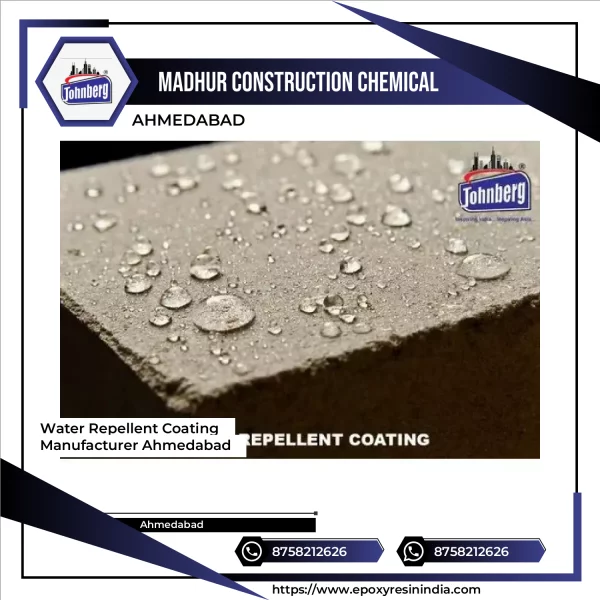
Water Repellent Coating Is A High Performance Protective Solution Designed To Prevent Water Penetration And Moisture Damage On Various Surfaces. It Creates A Transparent Barrier That Repels Water While Allowing The Surface To Breathe Naturally. This Coating Helps Protect Walls Roofs Tiles Concrete Stone Wood And Other Construction Materials From Rain Humidity And Water Seepage. It Is Widely Used In Residential Commercial And Industrial Projects To Improve Durability And Maintain The Appearance O Continue